
J Plasma ThermiTight Comparison: 5 Ultimate Secrets to Choosing Your Ideal Skin Tightening
Embarking on a journey to achieve firmer, more youthful skin often leads to a crucial decision point: understanding the nuances of advanced aesthetic procedures. A key consideration for many seeking effective skin tightening is a thorough J Plasma ThermiTight Comparison. These two innovative, minimally invasive treatments offer remarkable solutions for lax skin, but they operate on different principles and yield distinct results. Making the right choice hinges on understanding these differences.
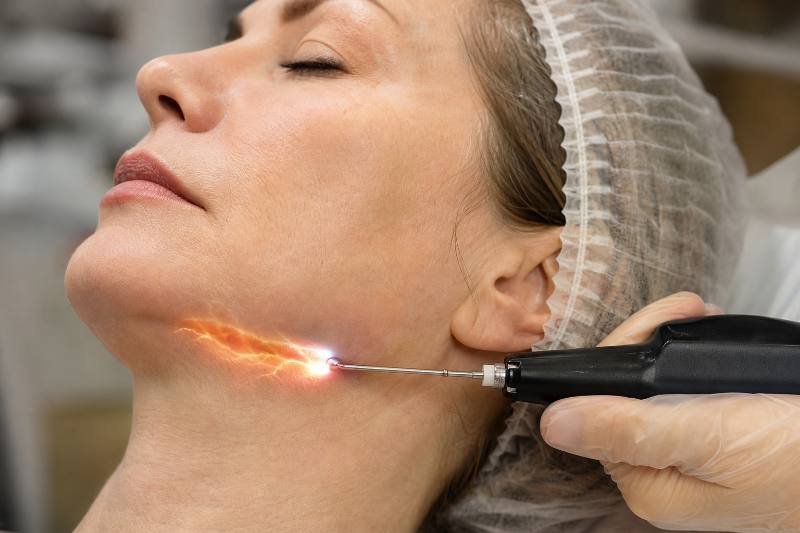
This comprehensive guide will demystify both J Plasma (also known as Renuvion) and ThermiTight, providing you with the ultimate secrets to selecting the ideal skin tightening solution for your unique aesthetic goals. We will delve into their core technologies, effectiveness, recovery profiles, and ideal candidacy, ensuring you are fully informed to make a confident decision. By the end, you will have a clear understanding of which procedure aligns best with your vision for a revitalized appearance.
Key Takeaways for J Plasma ThermiTight Comparison
- Understand the fundamental technological differences: J Plasma uses cold plasma for immediate contraction, while ThermiTight employs radiofrequency for gradual collagen remodeling.
- Discover which procedure offers more dramatic skin retraction and which provides sustained, natural-looking improvement over time.
- Learn about the typical recovery times and anesthesia options for both J Plasma and ThermiTight, aiding your planning process.
- Identify the ideal candidate profiles for each treatment, ensuring you choose the method best suited for your specific skin laxity and body areas.
- Gain insight into cost considerations and the potential for combining these powerful treatments for enhanced results.
Understanding the Core Technologies: J Plasma ThermiTight Comparison
When considering advanced skin tightening, a fundamental J Plasma ThermiTight Comparison begins with understanding the distinct energy sources each technology employs. Both are minimally invasive, designed to tighten loose skin without extensive surgery, yet their mechanisms of action are quite different, leading to varied outcomes and suitability for different concerns.
These innovative procedures represent significant advancements in aesthetic medicine, offering alternatives to traditional surgical lifts for individuals with mild to moderate skin laxity. Knowing how each works at a cellular level is key to appreciating their unique benefits and making an informed decision about your treatment.
What is J Plasma (Renuvion)? A Key Aspect of J Plasma ThermiTight Comparison
J Plasma, also known by its brand name Renuvion, utilizes a unique combination of helium gas and radiofrequency (RF) energy to create a cool atmospheric plasma. This plasma energy is delivered subdermally through a small incision, causing immediate tissue contraction. The precision and rapid cooling effect of the helium plasma allow for significant tightening while minimizing thermal damage to surrounding tissues.
The science behind J Plasma is fascinating. The cold plasma energy instantly contracts the collagen fibers beneath the skin, leading to a noticeable tightening effect right after the procedure. This makes it a powerful tool for areas requiring substantial skin retraction, offering a distinct advantage in a J Plasma ThermiTight Comparison for those seeking more dramatic, immediate results.
For a deeper dive into the science of cold plasma, you can explore resources like this review on plasma medicine. This technology is particularly effective for larger body areas where significant tightening is desired, such as the abdomen, arms, or thighs.
What is ThermiTight? An Essential Part of J Plasma ThermiTight Comparison
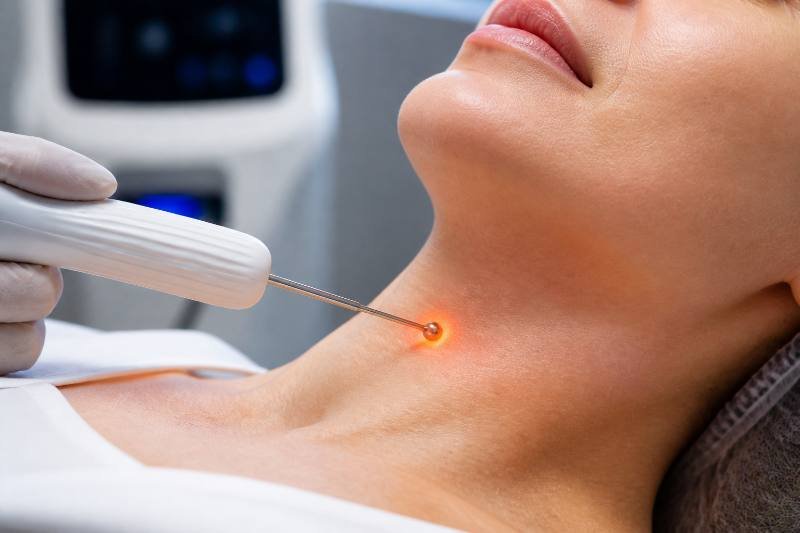
ThermiTight, on the other hand, employs controlled radiofrequency (RF) energy to heat the subdermal tissues. A tiny probe is inserted under the skin, delivering precise RF energy to specific areas. This controlled heating stimulates collagen production and causes existing collagen fibers to contract, leading to gradual and long-term skin tightening.
The ThermiTight process is about sustained collagen remodeling. While some immediate contraction may be observed, the full benefits develop over several months as the body naturally produces new collagen. This makes it an excellent choice for individuals seeking a more subtle, natural-looking improvement in skin firmness and elasticity, a crucial point in any J Plasma ThermiTight Comparison.
ThermiTight is often favored for smaller, more delicate areas such as the neck, jowls, and inner thighs, where precise temperature control and gradual tightening are beneficial. Its ability to stimulate long-term collagen synthesis contributes to lasting results.
Key Differences Between J Plasma and ThermiTight for Skin Tightening
The primary distinction in a J Plasma ThermiTight Comparison lies in their energy sources and the speed of their results. J Plasma uses cold plasma for rapid, more dramatic contraction, while ThermiTight uses RF energy for controlled heating and gradual collagen remodeling. J Plasma offers more immediate and often more significant tightening, whereas ThermiTight provides a more subtle, progressive improvement.
Another key difference is the temperature at which they operate. J Plasma’s
Considering J Plasma ThermiTight Comparison for Your Skin Tightening?
At The Face Doctor of Florida – Suria Plastic Surgery, Dr. Shashi Kusuma offers personalized consultations to guide you through the ideal choice for your aesthetic goals.
What are the key differences between J Plasma and ThermiTight for skin tightening?
J Plasma (Renuvion) uses cold plasma energy to contract skin subdermally, while ThermiTight uses radiofrequency (RF) energy for controlled heating. J Plasma often provides more immediate and dramatic skin contraction, ideal for moderate to severe laxity. ThermiTight offers gradual, long-term collagen remodeling, suitable for mild to moderate sagging.
How does J Plasma compare to ThermiTight regarding treatment effectiveness for skin laxity?
In a J Plasma ThermiTight comparison, J Plasma is generally considered more effective for significant skin laxity, delivering noticeable results often after one treatment due to its rapid tissue contraction. ThermiTight offers substantial improvement for mild to moderate laxity through sustained collagen production, with results developing over several months.
Which procedure, J Plasma or ThermiTight, offers a faster recovery time?
Both J Plasma and ThermiTight are minimally invasive, typically involving local anesthesia and small incisions. Recovery times are comparable, usually a few days to a week of swelling and bruising. However, individual healing varies, and specific post-procedure care will influence the total recovery duration for both J Plasma ThermiTight comparison options.
What is the typical cost comparison for J Plasma versus ThermiTight treatments?
The cost of J Plasma and ThermiTight can vary widely based on the treated area, geographic location, and the practitioner’s expertise. Generally, J Plasma may have a higher upfront cost per area due to the technology involved, while ThermiTight might be slightly less. A personalized consultation is essential for accurate pricing on a J Plasma ThermiTight comparison.
Is J Plasma better than ThermiTight for significant body skin tightening?
For areas with significant skin laxity on the body, J Plasma often yields more pronounced results than ThermiTight. Its ability to achieve substantial tissue contraction makes it a powerful option for tightening loose skin on the abdomen, arms, and thighs, offering a compelling advantage in a J Plasma ThermiTight comparison for extensive tightening needs.
Who is an ideal candidate for J Plasma, and who is better suited for ThermiTight?
Ideal candidates for J Plasma are those with mild to moderate skin laxity and good skin elasticity who desire significant, immediate contraction. ThermiTight is best for individuals with mild to moderate laxity seeking gradual, natural-looking improvement and are comfortable with a less aggressive approach. A consultation is crucial for determining suitability for J Plasma ThermiTight comparison.
How long do the results of J Plasma typically last compared to ThermiTight?
Both J Plasma and ThermiTight can provide long-lasting results, often several years, as they stimulate the body’s natural collagen production. The longevity depends on individual aging processes, lifestyle, and skincare maintenance. Maintaining results for either procedure in a J Plasma ThermiTight comparison often involves a healthy lifestyle and proper skin care.
What are the potential risks and side effects of J Plasma versus ThermiTight?
Both procedures carry minimal risks such as swelling, bruising, and temporary numbness. Rare side effects can include burns, infection, or contour irregularities. Serious complications are uncommon when performed by an experienced surgeon. Discussing these risks is a key part of any J Plasma ThermiTight comparison consultation.
Can J Plasma and ThermiTight be used in conjunction for enhanced results?
In some cases, a skilled surgeon may recommend combining J Plasma and ThermiTight for synergistic effects, particularly for complex areas or to achieve multi-layered tightening. This advanced approach should only be considered after a thorough evaluation and discussion with an expert in both technologies to enhance J Plasma ThermiTight comparison outcomes.
Which technology, J Plasma or ThermiTight, provides more dramatic skin retraction?
J Plasma is generally recognized for providing more dramatic and immediate skin retraction compared to ThermiTight. Its unique cold plasma energy facilitates significant tissue contraction, making it a preferred choice for individuals seeking a more pronounced tightening effect. This is a key distinguishing factor in a J Plasma ThermiTight comparison.
Where can I find clinics that offer both J Plasma and ThermiTight consultations?
To find clinics offering both J Plasma and ThermiTight consultations, look for board-certified plastic surgeons or aesthetic practices specializing in advanced skin tightening technologies. The Face Doctor of Florida – Suria Plastic Surgery, for example, offers expert guidance on both options, ensuring a comprehensive J Plasma ThermiTight comparison to meet your needs.
Why would someone choose J Plasma over ThermiTight for neck and jowl tightening?
A patient might choose J Plasma over ThermiTight for neck and jowl tightening if they desire more noticeable and immediate lifting with greater skin contraction. J Plasma’s powerful yet precise energy can effectively address moderate to severe laxity in these delicate areas, often providing results closer to a surgical lift without extensive downtime in a J Plasma ThermiTight comparison.
What kind of anesthesia is typically used for J Plasma vs ThermiTight procedures?
Both J Plasma and ThermiTight procedures are commonly performed using local anesthesia, often with oral sedation to ensure patient comfort. This approach minimizes risks associated with general anesthesia and allows for a quicker recovery time. The choice of anesthesia will be discussed during your J Plasma ThermiTight comparison consultation.
How many treatments are generally required for optimal results with J Plasma vs ThermiTight?
Typically, optimal results with J Plasma are achieved in a single treatment session. ThermiTight often provides significant results in one session as well, though some individuals may benefit from additional treatments to enhance collagen stimulation over time. This single-session advantage is often highlighted in a J Plasma ThermiTight comparison.
Are there any non-surgical alternatives to J Plasma and ThermiTight for similar results?
Yes, while J Plasma and ThermiTight are minimally invasive, other non-surgical alternatives include Ultherapy (focused ultrasound), Thermage (non-invasive RF), and various laser treatments. These options offer varying degrees of skin tightening, generally less dramatic than J Plasma or ThermiTight, but without incisions or downtime. Each has its place in the spectrum of J Plasma ThermiTight comparison options.