The journey after a skin cancer diagnosis can be daunting, but the path to recovery and restoration is often marked by incredible resilience and hope. For many, this journey includes Mohs micrographic surgery, a highly effective procedure for removing skin cancer with minimal damage to healthy tissue. However, the precise removal often leaves a wound that requires expert reconstruction. This is where Mohs Repair Patient Stories truly shine, offering powerful insights into healing, transformation, and renewed confidence.
In this comprehensive guide, we delve into the experiences of individuals who have undergone Mohs repair, sharing their challenges, triumphs, and the remarkable outcomes achieved through skilled reconstructive surgery. We will explore what Mohs repair entails, what to expect during recovery, and how these inspiring narratives can provide comfort and guidance for others facing similar circumstances. Discover how these transformations go beyond the physical, restoring not just appearance but also peace of mind and quality of life.
Key Takeaways from Mohs Repair Patient Stories
- Understand the crucial role of Mohs repair in restoring appearance and function after skin cancer removal.
- Explore 7 inspiring Mohs Repair Patient Stories, highlighting diverse healing journeys and successful outcomes.
- Learn about common recovery challenges and effective coping strategies shared by patients.
- Discover the importance of choosing an experienced surgeon for optimal cosmetic results in Mohs repair.
- Gain insights into what questions to ask your surgeon and where to find support throughout your reconstructive journey.
Understanding Mohs Repair Patient Stories: The Journey Begins
When skin cancer is diagnosed, Mohs micrographic surgery is often recommended due to its high cure rate and tissue-sparing precision. This technique involves removing cancer layer by layer until only cancer-free tissue remains. While incredibly effective, it can leave a wound, particularly in cosmetically sensitive areas like the face, nose, or ears. This is where Mohs repair surgery becomes essential.
Mohs repair, also known as Mohs reconstruction, is the subsequent procedure performed by a plastic or reconstructive surgeon to close the wound and restore the appearance and function of the treated area. The goal is not just to close the defect but to minimize scarring, preserve natural contours, and achieve the best possible aesthetic outcome. Many Mohs Repair Patient Stories highlight the critical role of this reconstructive phase in their overall healing.
Without skilled repair, the wound could heal with significant scarring, distortion, or functional impairment. Therefore, the reconstructive surgeon’s expertise is paramount in transforming a surgical defect into a well-healed, natural-looking result. This is a common theme in all positive Mohs Repair Patient Stories.
Why Mohs Repair is Essential for Patient Stories
Mohs repair is crucial because it addresses both the aesthetic and functional aspects of the post-surgical site. For instance, a defect on the eyelid could impair vision, while one on the nose could affect breathing. Beyond function, the emotional impact of visible scarring can be profound. Mohs Repair Patient Stories frequently emphasize how successful reconstruction alleviates these concerns, allowing individuals to regain their confidence and sense of self.
The techniques used in Mohs repair are highly individualized, ranging from simple primary closures to complex flap or graft procedures. The choice of technique depends on the size, location, and depth of the wound, as well as the patient’s skin characteristics and overall health. Each of these decisions contributes to the unique narrative of Mohs Repair Patient Stories.
7 Inspiring Mohs Repair Patient Stories: Real Transformations
Every individual’s journey with skin cancer and subsequent Mohs repair is unique, yet many share common threads of resilience, hope, and remarkable transformation. These Mohs Repair Patient Stories offer a glimpse into the diverse experiences and successful outcomes that are possible with expert care.
Sarah’s Story: Restoring Confidence After Nasal Reconstruction
Sarah, a vibrant 62-year-old, faced Mohs surgery for basal cell carcinoma on her nose. The removal left a significant defect on the tip, causing her considerable anxiety about her appearance. Her Mohs repair involved a complex local flap, meticulously designed to match the surrounding skin. Sarah’s Mohs Repair Patient Stories entry highlights her initial fear, followed by immense relief and joy as her nose healed beautifully, with the scar blending almost imperceptibly. She regained her confidence, feeling like herself again.
David’s Journey: A Seamless Forehead Repair
David, 70, had skin cancer removed from his forehead. The resulting wound was large, and he worried about a prominent scar. His surgeon utilized advanced closure techniques, carefully aligning the skin edges with minimal tension. David’s Mohs Repair Patient Stories recount his diligent aftercare and the gradual fading of his scar. He often shares his experience to reassure others that even large defects can be repaired with impressive cosmetic results.
Maria’s Experience: Overcoming Emotional Challenges in Mohs Repair Patient Stories
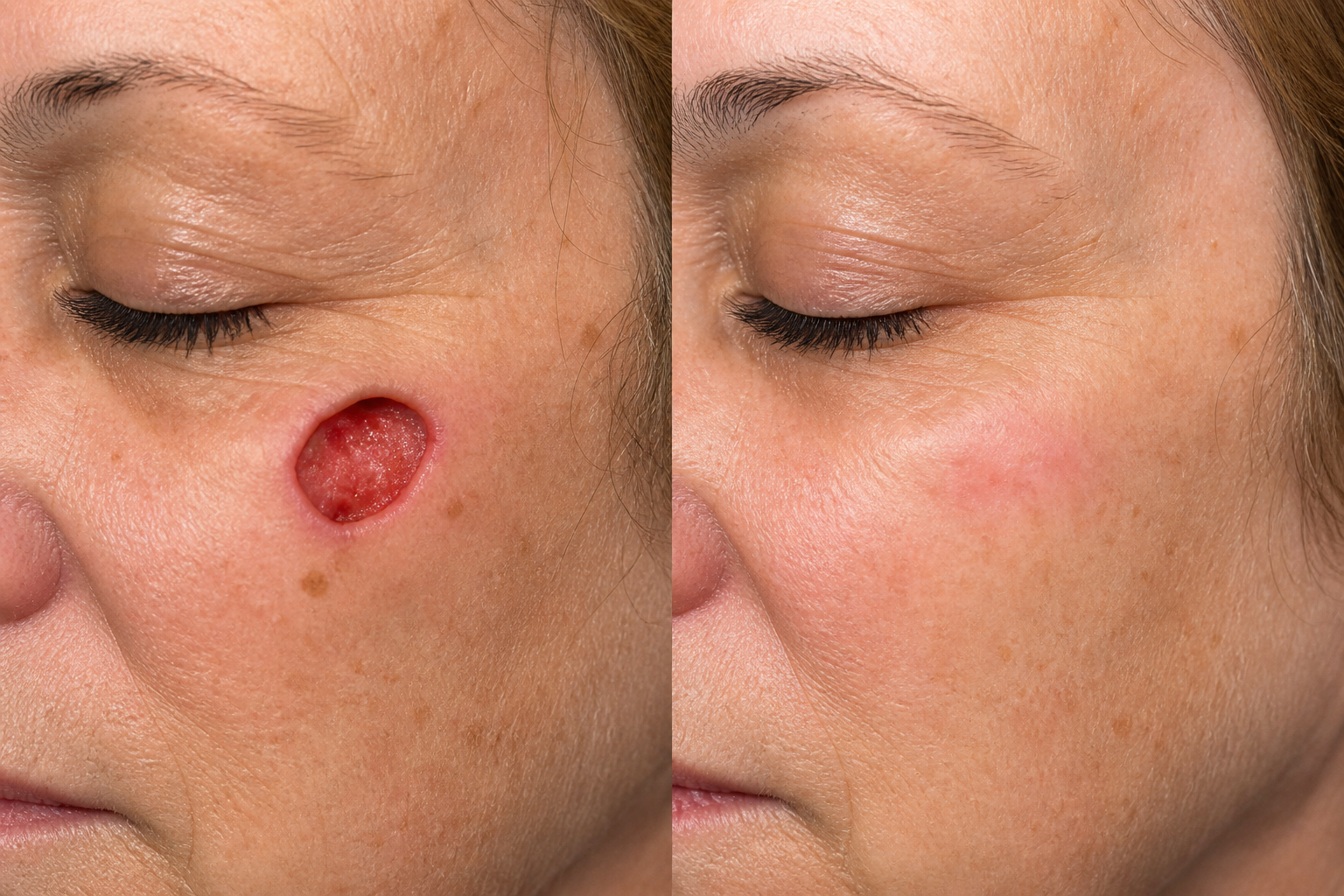
Maria, 55, underwent Mohs surgery on her cheek. The immediate post-operative appearance was distressing, leading to feelings of self-consciousness. Her Mohs repair was successful, but the emotional healing took time. Maria’s Mohs Repair Patient Stories emphasize the importance of emotional support, counseling, and patience during recovery. She found solace in connecting with other survivors, realizing her feelings were normal and that her appearance would improve significantly over time.
John’s Path: Expecting Pain Management After Mohs Repair
John, 68, had a large skin cancer removed from his ear, requiring a skin graft for repair. He was concerned about post-operative pain. His surgeon provided clear instructions for pain management, including prescribed medication and cold compresses. John’s Mohs Repair Patient Stories confirm that while there was discomfort, it was manageable with the right approach. He advises future patients to openly discuss pain expectations and management strategies with their surgical team.
Emily’s Outcome: Can Mohs Repair Completely Hide the Scar, According to Patient Stories?
Emily, 48, had a small but deep lesion removed from her lip, fearing a noticeable scar. Her Mohs repair was performed with meticulous attention to detail, aligning the vermilion border of her lip precisely. Emily’s Mohs Repair Patient Stories demonstrate that while no scar can be entirely invisible, skilled reconstruction can make it remarkably inconspicuous. Her scar is now barely noticeable, blending into the natural lines of her lip, a testament to her surgeon’s expertise.
Robert’s Recovery: The Typical Timeline for Mohs Repair Patient Stories
Robert, 75, underwent Mohs surgery for a lesion near his eye. His Mohs repair involved a complex reconstruction to preserve eyelid function. He was curious about the recovery timeline. Robert’s Mohs Repair Patient Stories highlight that initial healing, including stitch removal, took about two weeks. Swelling and bruising subsided over several weeks, but full scar maturation, where the scar softens and fades, extended over several months. He learned that patience is key for optimal results.
Lisa’s Choice: Finding the Best Mohs Repair Specialist
Lisa, 60, had a recurring skin cancer on her temple. She was determined to find a surgeon specializing in facial reconstruction after Mohs. Her research led her to a board-certified plastic surgeon with extensive experience in Mohs repair. Lisa’s Mohs Repair Patient Stories underscore the value of seeking out specialists with a proven track record, often found through patient reviews and before-and-after galleries. Her choice resulted in an excellent outcome, reinforcing the importance of selecting the right expert for complex cases.
Navigating the Mohs Repair Patient Stories: Challenges and Support
While Mohs Repair Patient Stories often culminate in successful outcomes, the journey itself can present various challenges. Understanding these common hurdles and knowing where to find support can significantly ease the recovery process.
Common Challenges in Mohs Repair Patient Stories Recovery
Patients frequently encounter several challenges during Mohs repair recovery. These can include managing post-operative pain and discomfort, visible bruising and swelling, and strict wound care protocols. The temporary changes in appearance can also lead to emotional distress, anxiety, or self-consciousness. Many Mohs Repair Patient Stories reveal that limiting physical activities and sun exposure are common adjustments that require patience and discipline. Open communication with your surgeon and their team is vital to address any concerns effectively.
Support Groups for Mohs Repair Patient Stories
Coping with the emotional impact of Mohs repair and scarring is a significant part of the healing process. Many patients find immense value in support groups, both online and in-person. These communities provide a safe space to share experiences, ask questions, and receive encouragement from others who understand. Organizations like the Skin Cancer Foundation or local hospital networks often host such groups. Engaging in self-care, maintaining a positive outlook, and understanding that scar improvement is a gradual process are crucial for emotional well-being, as echoed in numerous Mohs Repair Patient Stories.
Considering Mohs Repair? Hear from Real Patient Stories at The Face Doctor of Florida
Dr. Shashi Kusuma, a board-certified plastic surgeon, specializes in advanced Mohs repair techniques to restore natural appearance and confidence. Trust our expertise for your reconstructive journey.
Essential Information for Mohs Repair Patient Stories
Equipping yourself with knowledge is a powerful step in preparing for Mohs repair. Here, we address key questions that frequently arise in Mohs Repair Patient Stories.
Asking the Right Questions Before Mohs Reconstructive Surgery
Before undergoing Mohs reconstructive surgery, it is essential to have a thorough discussion with your surgeon. Key questions to ask include: What specific repair technique will be used? What are the expected cosmetic and functional outcomes? How long will the recovery period be? What are the potential risks and complications? How will pain be managed? What are the instructions for wound care? Can I see before and after photos of similar cases? What is the estimated cost? These questions empower you to make informed decisions, as highlighted in many proactive Mohs Repair Patient Stories.
Different Mohs Repair Techniques and Patient Satisfaction
The impact of different Mohs repair techniques on patient satisfaction and cosmetic results is significant. Simple primary closure is ideal for small, linear defects. Complex local flaps involve moving adjacent skin to cover the defect, often yielding excellent color and texture match. Skin grafts, where skin is taken from another part of the body, are used for larger defects. Each technique has its advantages and considerations, and a skilled surgeon will select the most appropriate method to achieve optimal results, a factor often emphasized in positive Mohs Repair Patient Stories. For further reading on reconstructive options, the American Academy of Dermatology provides comprehensive information on Mohs surgery and reconstruction.
Cost of Mohs Repair Surgery: Patient Experiences
Understanding the typical cost of Mohs repair surgery, especially without insurance, is a common concern for patients. The cost can vary widely based on the complexity of the repair, the surgeon’s fees, anesthesia, and facility charges. Many Mohs Repair Patient Stories indicate that while insurance often covers the reconstructive portion following cancer removal, out-of-pocket expenses can still be substantial. It is crucial to get a detailed estimate from your surgeon’s office and inquire about payment plans or financial assistance options. Always discuss these aspects during your initial consultation.
Where to Find Real Mohs Repair Patient Stories and Before & After Photos
Real patient testimonials and before-and-after photos are invaluable resources for prospective patients. You can often find these on a plastic surgeon’s official website, through independent review platforms like Google Reviews or RealSelf, and sometimes on specialized forums or support groups dedicated to skin cancer survivors. Reputable clinics, like The Face Doctor of Florida, often feature “before and after” galleries with patient consent, offering visual evidence of results and showcasing successful Mohs Repair Patient Stories. Always verify the authenticity of testimonials and look for consistent positive feedback regarding both surgical skill and patient care.
Your Path Forward: Scheduling a Consultation for Mohs Repair Patient Stories
Your journey to healing and restoration after a skin cancer diagnosis is a deeply personal one, and the decision to undergo Mohs repair is a significant step. As these Mohs Repair Patient Stories illustrate, the outcome can be truly transformative, restoring not only your appearance but also your confidence and peace of mind. Choosing an experienced, board-certified plastic surgeon specializing in facial reconstruction is paramount to achieving the best possible results.
If you are considering Mohs repair after your skin cancer diagnosis, the next crucial step is to schedule a consultation with a qualified specialist. This initial meeting allows you to discuss your specific needs, understand the recommended repair techniques, and review potential outcomes. It’s an opportunity to ask all your questions and feel confident in your chosen path. The Face Doctor of Florida is dedicated to providing compassionate, expert care for complex reconstructive cases. We invite you to explore our services and learn more about our approach to successful Mohs repair outcomes on our official website.
By carefully selecting your surgical team and understanding the process, you can embark on your reconstructive journey with optimism, knowing that you are taking the best steps towards a complete and confident recovery. These inspiring Mohs Repair Patient Stories serve as a testament to the power of expert care and personal resilience.
What is Mohs repair surgery and why is it needed after skin cancer removal?
Mohs repair surgery, or Mohs reconstruction, is a specialized procedure performed after Mohs micrographic surgery to close the wound and restore the appearance and function of the treated area. It’s needed because Mohs surgery precisely removes skin cancer layer by layer, often leaving an open wound that requires skilled reconstruction, especially in cosmetically sensitive areas like the face. The goal is to minimize scarring and achieve the best possible aesthetic outcome.
How long does recovery typically take after Mohs repair surgery?
The recovery period after Mohs repair surgery varies significantly depending on the size and location of the wound, as well as the individual’s healing capacity. Generally, initial healing for stitches takes about 1-2 weeks. Swelling and bruising may persist for several weeks. Full scar maturation, where the scar softens and fades, can take anywhere from 6 months to over a year. Patients are usually advised to avoid strenuous activities for a few weeks post-surgery.
Where can I find real patient testimonials about Mohs repair outcomes?
Real patient testimonials about Mohs repair outcomes can often be found on a plastic surgeon’s official website, through independent review platforms like Google Reviews or RealSelf, and sometimes on specialized forums or support groups dedicated to skin cancer survivors. Many reputable clinics also feature “before and after” galleries with patient consent, offering visual evidence of results. Always verify the authenticity of testimonials.
What are the common challenges patients face during Mohs repair recovery?
Patients often encounter several challenges during Mohs repair recovery. These can include managing post-operative pain and discomfort, visible bruising and swelling, strict wound care protocols, emotional distress related to temporary changes in appearance, and the patience required for scars to mature and fade. Limiting physical activities and sun exposure are also common adjustments. Open communication with your surgeon can help address these concerns.
Can Mohs repair completely hide the scar, according to patient stories?
According to many Mohs repair patient stories, while complete invisibility is rare, skilled reconstructive surgery can significantly minimize and camouflage the scar. The goal is to make the scar as inconspicuous as possible, often blending it into natural skin creases or shadows. Factors like the wound’s original size and location, the surgeon’s expertise, and individual healing patterns all influence the final cosmetic outcome. Early scar management techniques also play a role.
How do patients cope with the emotional impact of Mohs repair and scarring?
Coping with the emotional impact of Mohs repair and scarring involves a multi-faceted approach. Many patients find support through online communities, counseling, or by openly discussing their feelings with family and friends. Focusing on the successful removal of cancer is paramount. Additionally, engaging in self-care, maintaining a positive outlook, and understanding that scar improvement is a gradual process are crucial for emotional well-being.
What questions should I ask my surgeon before Mohs reconstructive surgery?
Before Mohs reconstructive surgery, essential questions to ask your surgeon include: What specific repair technique will be used? What are the expected cosmetic and functional outcomes? How long will the recovery period be? What are the potential risks and complications? How will pain be managed? What are the instructions for wound care? Can I see before and after photos of similar cases? What is the estimated cost?